Honey has been used in wound care for thousands of years, but modern medicine has taken this traditional remedy a step further with the development of medical grade honey products specifically designed for safe wound treatment. Today, honey for wounds is widely used in hospitals, long-term care facilities, and home care settings to help manage infection, support healing, and protect damaged skin.
If you are wondering whether medical honey actually works, how to use a honey wound dressing, and what types of wounds may benefit from it, this guide breaks it all down.
What Is Medical Grade Honey?
Not all honey is the same when it comes to wound care. Medical grade honey is specially processed and sterilized for medical use, making it safe to apply to wounds.
Unlike regular table honey, medical honey is prepared under strict standards to remove contaminants and ensure consistent antibacterial activity. This is important because raw honey can contain bacteria or spores that are not safe for open wounds.
Products made with medical grade honey are designed to create a controlled environment that supports healing while helping protect the wound from harmful bacteria.
How Honey for Wounds Works
The reason honey for wounds has remained popular for centuries comes down to several unique properties.
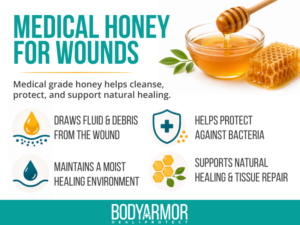
Honey naturally creates an osmotic effect, meaning it helps draw fluid through the wound. This can help remove debris and support the body’s natural cleansing process. Honey also maintains a low pH environment, which can make it harder for bacteria to grow.
Another major advantage of medical honey is that it helps maintain a moist wound environment without oversaturating the skin. This balance supports autolytic debridement, where the body’s own enzymes soften and remove dead tissue naturally.
Research published on medical-grade honey also highlights how medical grade honey may support wound healing, reduce bacterial burden, and improve patient comfort in certain wounds.
Key Benefits of Honey for Wounds
There are several reasons why clinicians and caregivers continue using honey for wounds in modern wound care.
One of the biggest benefits is antibacterial support. Medical grade honey has been shown to help reduce bacterial growth, including certain antibiotic-resistant bacteria.
It may also help reduce wound odor, which often develops when bacteria break down tissue proteins. Honey helps shift this process and can improve comfort for both patients and caregivers.
Another important benefit is moisture balance. A honey wound dressing helps prevent wounds from becoming too dry while also protecting against excessive moisture buildup that can damage surrounding skin.
Many people also find that medical honey helps soothe irritated tissue and reduce inflammation around the wound.
What Types of Wounds Can Medical Honey Be Used On?
There are many situations where honey for wounds may be appropriate.
It is commonly used for acute wounds such as superficial and partial thickness burns, abrasions, surgical wounds, and donor sites. Honey can also be used to treat chronic wounds like pressure ulcers, diabetic ulcers, and venous and arterial ulcers. Some clinicians also use honey wound dressing products for wounds with delayed healing.
Because medical grade honey helps manage moisture and bacterial burden, it can be useful for wounds that have slough, odor, or mild-to-moderate drainage.
However, deeper or more severe wounds should always be evaluated by a healthcare provider before treatment.
How to Apply a Honey Wound Dressing
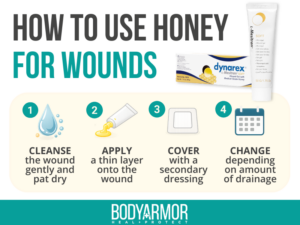
- Clean the wound gently with saline or a wound cleanser and gently pat dry.
- Apply a thin layer of medical honey directly to the wound or to sterile gauze first before placing it on the wound.
- Cover with a secondary dressing to help keep the product in place and manage drainage.
- Change the dressing based on drainage levels and healthcare provider instructions. Some honey dressings require reapplication when the product has been absorbed into the skin (typically approximately 1-2 days).
Before using honey for wounds, always follow the instructions provided by your healthcare provider, since different wounds may require different treatment approaches.
Why Medical Grade Honey Is Different from Regular Honey
A common misconception is that any honey can be used on wounds.
Regular honey from the grocery store is not sterile and may contain contaminants that may be unsafe for open skin. Medical grade honey undergoes sterilization and quality control processes to make it safe and reliable for wound care use.
This is one reason why wound care professionals recommend products specifically labeled as medical honey rather than homemade alternatives.
Important Considerations
While honey for wounds offers many benefits, it is not appropriate for every situation.
Some wounds may require additional treatments for infection control, drainage management, or pressure relief. Honey products can also increase drainage temporarily as they draw fluid from the wound.
People with bee or honey allergies should avoid using medical grade honey unless cleared by a healthcare provider.
Guidance from wound care research also notes that while evidence for natural approaches continues to grow, proper wound assessment and professional guidance remain essential.
Frequently Asked Questions
Medical honey products have become increasingly popular, but many people still have questions about how they work and when to use them. These answers cover some of the most common questions people ask about honey wound dressings.
Is honey good for wound healing?
Yes, research suggests that honey for wounds may help support healing by maintaining moisture balance, reducing bacterial growth, and supporting natural tissue repair. Medical grade honey products are specifically designed for safe wound care use.
What is the difference between medical honey and regular honey?
Medical grade honey is sterilized and processed specifically for medical use, while regular honey is not. Medical honey products are safer and more consistent for wound care applications.
Can you put honey directly on an open wound?
Only medical honey products should be applied to open wounds. Regular kitchen honey may contain contaminants that are unsafe for wound care.
What wounds can honey wound dressings be used for?
A honey wound dressing may be used for burns, ulcers, abrasions, surgical wounds, pressure ulcers, and other superficial or chronic wounds depending on provider guidance and wound condition.
Shop Medical Honey for Wounds at BODYARMOR Medical
If you are looking for a high-quality option for honey for wounds, BODYARMOR Medical offers trusted products designed for real-world wound care.
L-Mesitran Soft Honey Wound Dressing
This advanced honey wound dressing combines medical grade honey with additional skin-supporting ingredients to help maintain moisture balance and support healing.
Shop L-Mesitran Soft Honey Wound Dressing here!
L-Mesitran Soft contains 40% medical honey along with hypoallergenic lanolin, vitamins C and E, and other ingredients that help nourish and protect the skin. It can be used with many common secondary dressings and is suitable for a wide variety of wound types.
Because it helps maintain a balanced wound environment while supporting natural healing processes, it has become a popular option in both home care and professional wound care settings.


 BodyArmor
  May 18, 2026
  6 Minutes