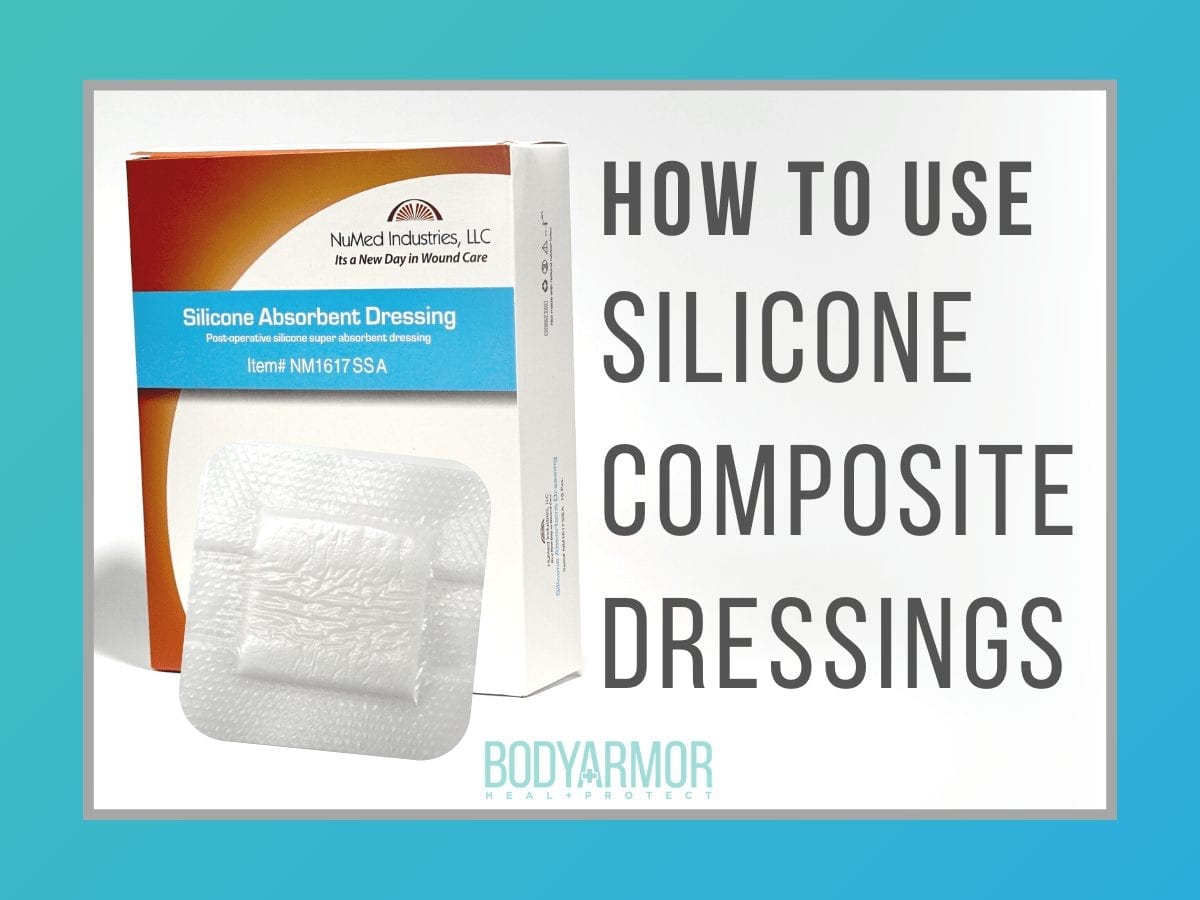
Silicone composite dressings combine a flexible, non-adherent, absorbent pad with a gentle adhesive border. These advanced wound care dressings can be applied directly to the wound bed as a primary dressing or as a secondary dressing to cover and secure.
When a wound needs protection, absorption, and comfort all at once, a silicone composite wound dressing is one of the most reliable options. These dressings combine multiple layers into one easy-to-use solution, helping manage drainage while protecting the wound and surrounding skin.
If you are looking for absorbent dressings for wounds that stay in place and reduce pain during changes, or trying to understand when to use a silicone wound dressing, this guide will walk you through everything you need to know.
What is a Silicone Composite Wound Dressing?
A silicone composite wound dressing is a multi-layer dressing designed to handle several aspects of wound care at once. Instead of using multiple products, this type of dressing combines absorption, protection, and secure placement into a single system.
Silicone composite dressings include an absorbent pad, a protective, waterproof outer film, a gentle adhesive border, and a soft silicone contact layer that touches the wound without sticking to it.
This layered design makes these composite dressings one of the most versatile absorbent dressings for wounds, especially when both protection and comfort are important.
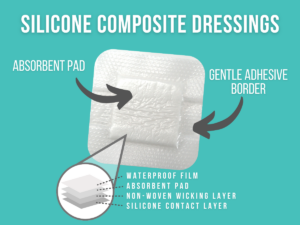
These dressings are easy to apply and non-medicated, so they can be used to secure virtually any primary dressing.
Silicone composite dressings are also a great choice for post-operative wounds, due to the built-in hypoallergenic contact layer that protects sutures and fragile healing tissue, reducing trauma or pain with dressing changes.
How a Silicone Composite Wound Dressing Works
A silicone composite wound dressing works by managing moisture while protecting the wound from outside contaminants.
The inner layer absorbs drainage and helps keep fluid away from the wound surface. At the same time, the outer layer acts as a barrier against bacteria, water, and friction.
The silicone wound dressing layer gently adheres to the skin without sticking to the wound itself. This helps reduce pain during removal and protects newly forming tissue.
Because of this design, composite dressings support healing while minimizing disruption to the wound.
Why Choose a Composite Dressing?
A composite wound dressing is often chosen because it simplifies wound care while still delivering strong performance.
It absorbs moderate to heavy drainage, making it a dependable option among absorbent dressings for wounds. It also provides cushioning, which helps reduce pressure and friction, especially in sensitive areas.
The adhesive border keeps the dressing securely in place without the need for additional tape and the silicone contact layer minimizes pain and trauma during removal.
Because everything is built into one dressing, it reduces the number of steps needed during application and dressing changes.
Key Benefits of Composite Wound Dressings
Composite wound dressings offer several advantages that make them widely used in both home and clinical settings.
They provide strong absorption, which helps manage drainage and protect surrounding skin. In addition, they reduce pain during dressing changes due to their non-adherent silicone layer. These dressings also create a protective barrier that helps keep bacteria and contaminants out.
Their flexible design allows them to comfortably conform to different areas of the body, including joints and curved surfaces. They reduce the risk of infection by absorbing debris and allowing for easy visualization of the wound without frequent removal.
Silicone composite dressings are semi-permeable, meaning they allow water vapor to escape, but block water and other contaminants from entering.
Because of these features, easy-to-apply silicone composite dressings are often preferred over other absorbent dressings for wounds that require multiple layers.
Types of Silicone Composite Dressings
There are several types of composite wound dressing, each designed for different needs.
Standard silicone composite dressings are ideal for general wound coverage and moderate to heavy drainage. These include flat, bordered options that are easy to apply and remove.
Sacral composite dressings are shaped specifically for areas like the lower back and tailbone. These are especially useful for pressure injuries and help reduce friction in high-risk areas.
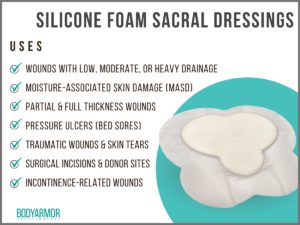
Larger sizes are available for wounds that require more coverage or added protection.
Choosing the right composite wound dressing depends on wound location, drainage level, and the need for cushioning or pressure relief.
How to Apply a Silicone Composite Dressing
- Clean the wound using saline or an appropriate wound cleanser and gently pat the surrounding skin dry with gauze.
- Apply a primary dressing if needed, such as alginate or collagen.
- Place the bordered silicone composite wound dressing over the wound, smoothing the adhesive border to secure in place.
- Change the dressing every 2 to 5 days, or sooner if it becomes saturated.
When to Use a Composite Wound Dressing
A silicone composite wound dressing works best for wounds with moderate to heavy drainage.
Common uses include surgical wounds, pressure injuries, venous ulcers, and wounds with granulation or necrotic tissue. These dressings are also a strong option when protection and cushioning are needed.
Because they combine multiple functions, they are often chosen over other absorbent dressings for wounds when convenience and performance are both important.
A silicone wound dressing is especially helpful for patients with sensitive skin due to the hypoallergenic silicone contact layer and gentle adhesive border.
Considerations for Silicone Composite Dressings
Composite wound dressings require intact skin around the wound to allow the adhesive border to anchor in place.
They should not be cut, as this can affect how the layers function together. If removal feels uncomfortable, lightly moistening the edges can help ease the process.
It is also important to monitor the wound regularly. If drainage increases or signs of infection appear, the dressing type may need to be adjusted.
Frequently Asked Questions
Choosing the right composite wound dressing can feel overwhelming, especially with different sizes and silicone options available. These quick answers cover the most common questions to help you use them with confidence.
What is a silicone composite wound dressing used for?
A silicone composite wound dressing is used for wounds with moderate to heavy drainage that need absorption, protection, and secure placement.
Are silicone composite dressings good absorbent dressings for wounds?
Yes, silicone composite dressings are highly effective absorbent dressings for wounds because they manage drainage to support healing while protecting the wound and surrounding skin.
What makes a silicone wound dressing different?
A silicone wound dressing includes a soft contact layer that does not stick to the wound, which helps reduce pain and trauma during removal.
How often should composite wound dressings be changed?
Most composite wound dressings are changed every 2 to 5 days, depending on the amount of drainage.
Shop Composite Wound Dressings at Body Armor Medical
If you are looking for a high-quality composite wound dressing, Body Armor Medical offers several options designed for comfort, absorption, and ease of use.
Our silicone composite dressings (4×4 and 6×7) provide excellent coverage with a gentle adhesive border and a soft silicone wound dressing contact layer. These are ideal for everyday wound care and work well as dependable absorbent dressings for wounds.
For the pressure-prone sacral (tailbone) area, our silicone foam sacral dressings (7×7 and 9×9) are shaped to fit the body and provide extra cushioning and protection. These are especially useful for preventing and managing pressure injuries.
Each option is designed to stay in place, manage drainage effectively, and reduce discomfort during dressing changes, making them a reliable choice for both home and clinical use.
BODYARMOR Medical Supply Co. was founded by physicians to make professional wound care dressings accessible and affordable.
Click Here To Explore Our Wound Care Dressings!


 BodyArmor
  April 25, 2026
  7 Minutes