When a wound is difficult to dress, exposed to moisture, or located in an awkward area, traditional bandages are not always the best option. That’s where Triad hydrophilic wound dressing stands out. Unlike standard dressings, Triad forms a protective coating directly on the skin and wound surface, helping manage moisture while supporting healing.
What Is Triad Hydrophilic Wound Dressing?
Triad hydrophilic wound dressing is a wound coating designed to adhere to moist or damaged skin. Instead of requiring a traditional adhesive bandage, it forms a protective coating directly over the wound and surrounding tissue, even when the area is wet, uneven, or difficult to cover.
Because of its thick, spreadable consistency, many people also refer to it as Triad paste or Triad wound cream.
What makes Triad cream different from many standard wound care products is its ability to stick to wet or irregular surfaces where traditional dressings may not stay in place.
This makes it especially useful for wounds near skin folds, areas exposed to moisture, or locations where tape and adhesives are difficult to use.
How Triad Wound Cream Works
Triad hydrophilic wound dressing works by creating a moist, protected environment over the wound while also shielding the surrounding skin from irritation.
It contains a unique blend of four key ingredients: petrolatum, cellulose gum (CMC), zinc oxide, and dimethicone.
Petrolatum helps create a protective moisture barrier, dimethicone supports skin protection and comfort while moisturizing periwound skin, zinc oxide shields the skin from irritation and excess drainage, and cellulose gum (CMC) helps the product adhere to wet skin and absorbs moisture.

This combination allows Triad hydrophilic wound dressing to stay in place even in areas affected by drainage, incontinence, or moisture exposure.
Unlike a dry dressing, Triad wound cream stays flexible and can be applied directly to difficult wound surfaces without needing to completely cover the area with adhesive materials.
This is especially helpful for moisture-associated skin damage and fragile skin since these require gentle, protective strategies that balance moisture control with skin protection.
The dressing supports autolytic debridement, which is the body’s natural process of softening and removing dead tissue. Because it maintains contact with the wound bed, it also helps reduce discomfort caused by friction and repeated dressing changes.
Why Triad Paste Is Different from Traditional Dressings
Traditional dressings usually require dry surrounding skin and adhesive borders to stay in place. In many wounds, especially those exposed to drainage or frequent moisture, this becomes difficult.
That’s where Triad paste offers an advantage.
Because it adheres directly to moist skin, it can protect wounds in areas where standard dressings may fail. It also allows clinicians and caregivers to apply wound protection without causing repeated trauma from adhesive removal.
Another major benefit is flexibility. Triad cream can be used alone or combined with other dressings depending on the wound type and drainage level.
Other topical ointments can leave wounds saturated, dried out, or require many re-applications. But the hydrophilic properties of Triad paste allow it to spread evenly over the wound surface, balancing moisture levels and remaining in place until removed.
And because it’s occlusive, Triad hydrophilic wound dressing also helps reduce the risk of infection by blocking bacteria and other contaminants from contact with the wound.
Common Uses for Triad Hydrophilic Wound Dressing
There are many situations where Triad hydrophilic wound dressing can be helpful.
It is commonly used for pressure ulcers, minor burns, superficial wounds, skin tears, dermal lesions, and venous stasis ulcers.
Because Triad wound cream can stay in place on moist skin, it is often used for wounds exposed to incontinence or excessive drainage.
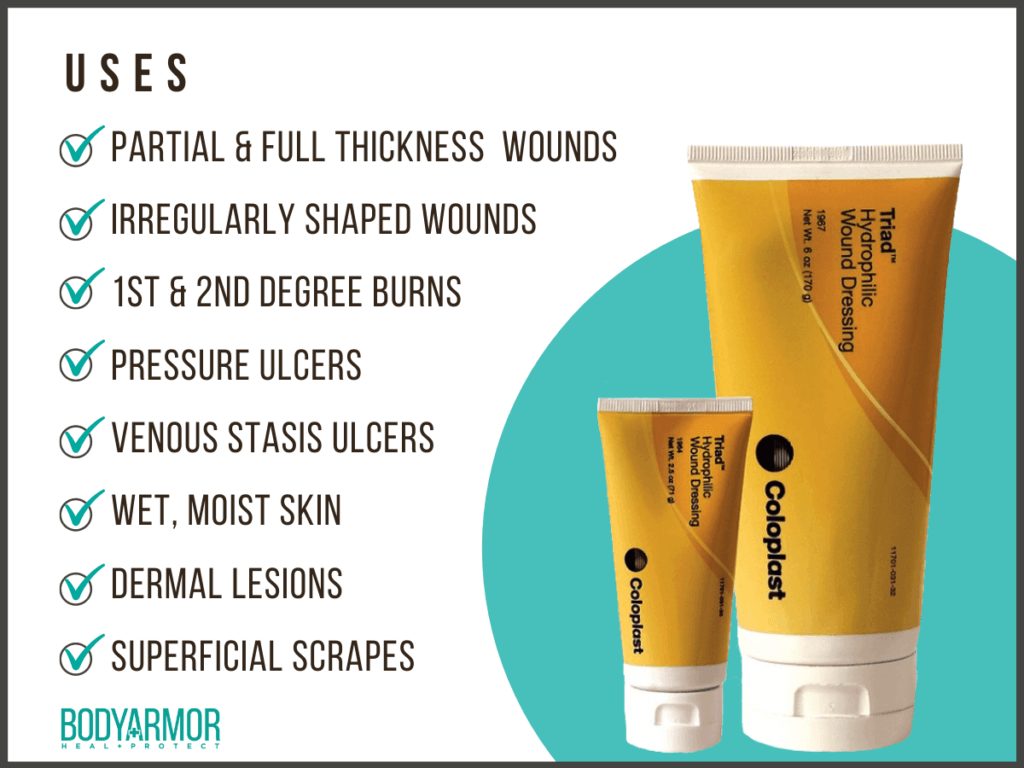
Triad paste is frequently used in wounds located near the buttocks, sacrum, groin, or skin folds where adhesives are difficult to maintain.
It can also help manage macerated periwound and protect fragile surrounding skin while supporting healing underneath.
How to Apply Triad Hydrophilic Wound Dressing
The technique for applying Triad cream depends on the type of wound being treated. Use the following guidelines for best results.
How to Apply Triad for Superficial Wounds:
- Cleanse area with wound cleanser.
- Using a gloved finger, spread a dime-thick layer of Triad Hydrophilic Wound Dressing over the area.
- Usually, a secondary dressing is not needed. However, to prevent staining, a piece of dry gauze may be placed on top of the paste.
How to Apply Triad for Wounds with Depth:
- Cleanse area with wound cleanser.
- Impregnate sterile gauze with Triad Hydrophilic Wound Dressing.
- Loosely pack impregnated gauze into wound, ensuring good contact with wound surface and filling any spaces with tunneling or undermining.
- Cover the wound with an appropriate secondary dressing, such as Bordered Gauze, Silicone Absorbent, or Bordered Foam.
This versatile topical wound paste can be left in place for up to 5-7 days depending on levels of wound drainage.
How to Remove Triad Hydrophilic Wound Dressing
- If in place, remove gauze or secondary dressing.
- Spray the wound and periwound with wound cleanser, then use gauze to gently wipe the area. To prevent trauma to fragile, healing tissues, do not use a rough or scrubbing motion.
- Repeat as needed until all paste has been removed.
To ensure complete removal of the paste, Triad should only be cleansed using a pH-balanced wound cleanser, not with saline.
Before using Triad hydrophilic wound dressing, always follow any instructions provided by your healthcare provider.
When Should You Use Triad Cream?
Triad hydrophilic wound dressing works best for wounds where moisture management and skin protection are both important.
It is especially useful for wounds that are difficult to bandage, wounds near body contours, and wounds exposed to moisture from drainage or incontinence.
Triad cream is also commonly used for fragile skin and superficial wounds where minimizing adhesive trauma is important.
Because it is flexible and easy to apply, it is frequently used in both home care and clinical settings.
Important Considerations
While Triad wound cream is highly versatile, it is not intended for every type of wound. For example, Triad paste should not be applied to severe (third degree) burns or infected wounds.
Deep wounds with heavy drainage may require additional absorbent products. It is also important to monitor the wound regularly for signs of infection or worsening skin breakdown.
When cleansing, Triad should be gently cleaned away with a pH-balanced wound cleanser before applying a fresh layer.
Frequently Asked Questions
Triad cream is a useful tool in wound care, but many people are unsure when and how to use it correctly. These answers cover some of the most searched questions about Triad wound dressing applications.
What is Triad hydrophilic wound dressing used for?
Triad hydrophilic wound dressing is used for wounds that need moisture protection and gentle coverage, especially in areas where traditional dressings do not stay in place well. It is commonly used for pressure injuries, venous ulcers, and moisture-associated skin damage.
Is Triad paste the same as Triad cream?
Yes, many people use the terms Triad paste, Triad cream, and Triad wound cream interchangeably. They generally refer to the same zinc oxide-based hydrophilic wound dressing product.
Can Triad wound cream be used on open wounds?
Yes, Triad hydrophilic wound dressing can be applied directly to certain open wounds, especially superficial wounds and pressure ulcers. However, wound care should always follow healthcare provider recommendations.
Shop Triad Hydrophilic Wound Dressing at BODYARMOR Medical
If you are looking for a reliable Triad hydrophilic wound dressing, BODYARMOR Medical offers different options designed for real-world wound care challenges.
For minor wounds requiring minimal applications, our 2.5 oz Triad wound dressing tube may be sufficient.
Our 6 oz Triad wound cream tube offers a convenient option for frequent applications and larger treatment areas. The easy-to-apply formula helps protect fragile skin while supporting a healthy healing environment.
Both options are designed to simplify wound care, reduce adhesive-related trauma, and provide dependable skin protection in home and clinical settings.


 BodyArmor
  May 12, 2026
  7 Minutes