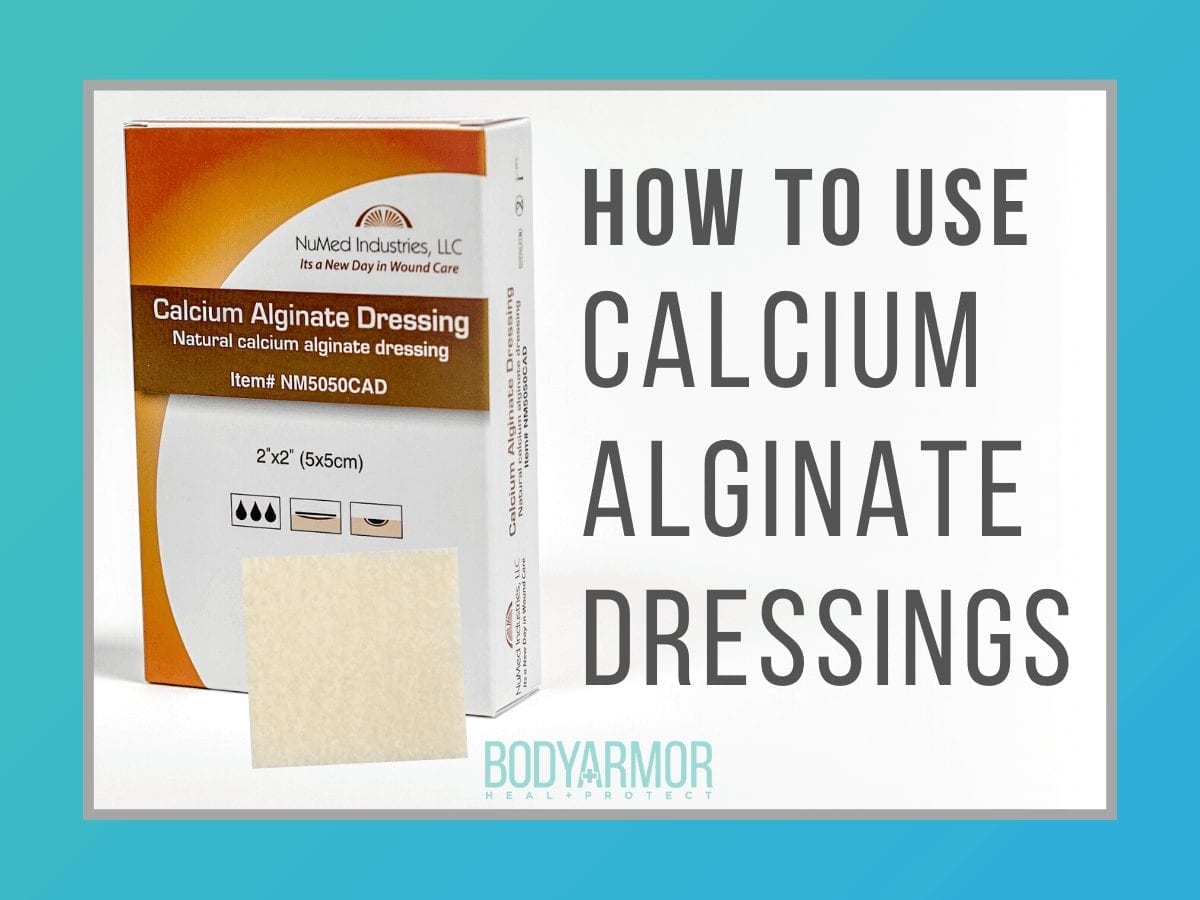
Calcium alginate wound dressings are used in advanced wound care for the management of highly draining wounds. The fibers of alginate are derived from seaweed and swell in response to moisture, transforming into a gel-like material that promotes moisture balance, keeps wounds clean, and facilitates natural healing.
If you are dealing with a wound that produces a lot of drainage, choosing the right dressing can make a big difference in how quickly and comfortably it heals. An alginate wound dressing is one of the best dressing options for managing moderate to heavy draining wounds while supporting a healthy healing environment.
Calcium alginate dressings are made from natural seaweed fibers and are designed to absorb fluid, protect the wound, and help your body heal more efficiently. In this guide, we’ll walk through exactly how they work, when to use them, and how to choose between standard, silver, and rope options.
What are Calcium Alginate Dressings?
An alginate wound dressings is an advanced wound care product made from calcium alginate, a material derived from seaweed. They are soft, highly absorbent dressings designed specifically for wounds that produce moderate to heavy exudate, making them one of the best dressings for draining wounds.
When applied to a wound, these dressings conform closely to the wound bed and create a gel-like layer that supports healing while managing fluid. Because of their high absorbency and gentle removal, they are commonly used in both clinical and home care settings across the United States.
According to research published in National Institutes of Health, maintaining a moist wound environment can significantly accelerate healing and reduce complications compared to dry wound care approaches.
How Do Alginate Wound Dressings Work?
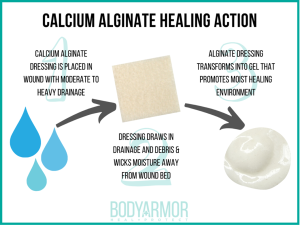
Calcium alginate wound care dressings work through an ion exchange process. When placed on a wound, the dressing reacts with the fluid (exudate) and calcium ions are released from the dressing while sodium ions are absorbed from the wound. This turns the dry fibers into a soft gel that sits directly on the wound.
This gel formation plays several important roles in wound healing. It fills irregular wound spaces, which is especially useful for cavities or undermining.
The gel also absorbs excess drainage, which is especially important for heavily draining wounds. It keeps the wound from drying out, which supports faster healing. It also helps your body naturally remove dead tissue over time, a process known as autolytic debridement.
Because of this mechanism, alginate dressings are particularly effective as a heavy drainage wound dressing, helping prevent maceration of surrounding skin while still keeping the wound environment balanced.
Why Alginate Dressings are One of the Best Dressings for Draining Wounds
Alginate dressings are widely used because they solve several common wound care challenges at once.
They can absorb a large amount of fluid, which helps prevent leakage and protects the skin around the wound. These dressings are also gentle to remove, since they don’t stick to the wound bed like some other dressings can.
Another benefit is that they conform easily to different wound shapes, including deeper or irregular wounds. Some versions also help control minor bleeding, which can be helpful after procedures or injuries.
In addition, alginate dressings allow for gas exchange, which supports tissue viability, and they can be used alongside other therapies such as medical-grade honey.
Another important benefit is their ability to reduce bacterial burden by trapping debris and microorganisms within the gel structure. Some versions also include antimicrobial agents like silver for enhanced protection.
Chronic wounds affect approximately 2% of the U.S. population and contribute to billions in annual healthcare costs, highlighting the importance of effective, evidence-based wound care strategies.
Standard vs. Calcium Alginate Ag (Silver)
Not all alginate dressings are the same, and choosing the right type depends on the condition of the wound.
A standard alginate wound dressing is best for non-infected wounds that have moderate to heavy drainage. It focuses on absorbing fluid and maintaining the right moisture balance.
A silver alginate dressing, often labeled as calcium alginate Ag, contains ionic silver with antimicrobial properties. Silver helps reduce bacteria in the wound, which can be important if there are signs of infection or if the wound is at higher risk to become infected.
So, a standard alginate dressing is typically appropriate for non-infected wounds with moderate to heavy drainage. In contrast, a silver alginate dressing is better suited for wounds that show signs of infection, such as increased drainage, odor, redness, or delayed healing.
If a wound looks red, has an odor, increased drainage, or is not improving, a silver dressing may be a better option. Once the wound improves, many people switch back to a standard alginate dressing.
When to Use Alginate Rope Dressings
For deeper wounds, a flat dressing may not be enough. That’s where alginate rope (or ribbon) dressings come in.
Alginate rope dressings are designed for wounds with tunneling or depth. The rope can be gently placed into the wound to ensure full contact with the wound bed while still allowing for drainage absorption.
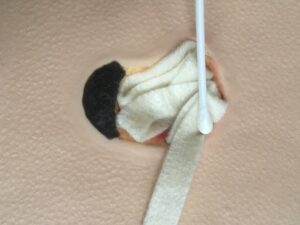
It is important not to pack the wound too tightly. The dressing will expand slightly as it absorbs fluid, so a light fill is all that is needed.
This makes alginate rope an essential tool in comprehensive alginate dressing wound care, particularly for complex, deep, or irregular wounds.
Key Advantages of Calcium Alginate Dressings:
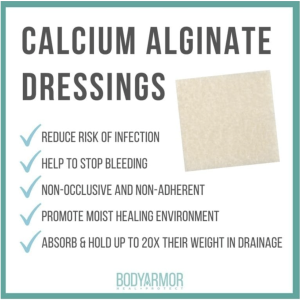
- Superior absorbency: Handles significant amounts of drainage.
- Reduced infection risk: Lowers bacterial burden and absorbs debris.
- Non-adherent: Minimizes pain during dressing changes.
- Versatile: Can be used on a wide range of wounds, including infected and tunneling wounds.
- Hemostatic properties: Helps control bleeding.
- Compatible with other treatments: Can be combined with topical agents like Santyl or medical-grade honey.
- Non-occlusive: Allows gas exchange.
- Antimicrobial options: Some alginate dressings contain silver for added infection protection.
How to Apply an Alginate Wound Dressing
- Clean the wound using saline or an appropriate wound cleanser and gently pat the surrounding skin dry with gauze.
- Select the appropriate dressing type (standard alginate, silver alginate, rope)
- Cut or shape the dressing to fit the wound bed, ensuring it does not overlap onto healthy skin.
- Place the dressing directly into or onto the wound. For tunneling wounds, gently place alginate rope into the space without packing tightly.
- Cover with a secondary dressing such as foam or gauze to secure.
- Change the dressing every 1 to 3 days, or sooner if it becomes saturated.
When Should You Use an Alginate Wound Dressing?
Calcium alginate dressings are best used for wounds that produce moderate to heavy drainage. They are commonly used for pressure injuries, venous leg ulcers, diabetic foot ulcers, and surgical wounds that have opened, or traumatic injuries.
They are also useful for wounds with uneven shapes, tunneling, undermining, or depth, where a more flexible dressing is needed.
However, they should not be used on dry wounds or wounds with very little drainage, since they need moisture to work properly.
Important Tips to Keep in Mind for Alginate Dressings
Choosing the right dressing is just one part of proper wound care. It is also important to monitor the wound regularly and watch for changes.
If you notice increasing redness, swelling, odor, or pain, it may be a sign of infection. Early attention to these signs is key to reducing wound complications.
Also, make sure the dressing fits properly and does not extend onto healthy skin, as this can cause irritation over time.
By understanding the benefits and proper application of calcium alginate dressings, healthcare professionals and caregivers can effectively manage a wide range of wound types and promote optimal healing outcomes.
Frequently Asked Questions
If you’re new to using an alginate wound dressing, it’s normal to have questions about when and how to use it. Here are some of the most common questions to help you feel more confident in managing wound care.
How often should alginate dressings be changed?
Alginate dressings are typically changed every 1 to 3 days, depending on the amount of drainage. Heavily draining wounds may require more frequent changes to prevent saturation and leakage.
Can I use an alginate wound dressing on an infected wound?
Yes, but a silver-containing alginate dressing is usually preferred for infected wounds because of its antimicrobial properties. Standard alginate dressings are better suited for clean wounds.
What happens if an alginate dressing is used on a dry wound?
Alginate dressings rely on moisture to form their gel structure. When used on a dry wound, they can adhere to the tissue and potentially cause discomfort or delay healing.
Are alginate wound dressings safe for home use?
Yes, alginate dressings are commonly used in home care settings. However, proper application and monitoring are important, and patients should follow guidance from a healthcare provider when managing more complex wounds.
Shop Calcium Alginate Dressings at Body Armor Medical
If you are looking for reliable alginate wound dressings for moderate to heavy drainage, Body Armor Medical offers a range of high-quality options designed for real-world use.
Our calcium alginate dressings are available in multiple sizes, including 2×2 and 4×5, as well as rope options for deeper wounds. We also carry calcium alginate Ag (silver) dressings for situations where added antimicrobial protection is needed.
Whether you are managing a wound at home or in a clinical setting, our products are designed to support effective healing while being easy to use and dependable.
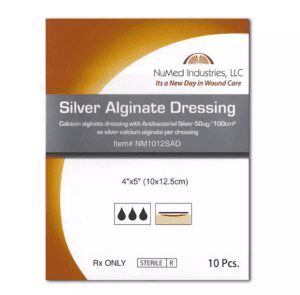
NuMed Calcium Alginate Dressings Are Available In:
- 2″ x 2″ sheets
- 4″ x 5″ sheets
- 12″ ropes

🎖 Your Order Supports US Veterans Through Operation Second Chance 🇺🇸
Have you tried calcium alginate dressings yet? Let us know what you think or ask any questions in the comments below!


 BodyArmor
  April 7, 2026
  9 Minutes


